The position of Research Associate is an honorary one, awarded to scholars outside the University of Reading – indeed, across the world – who are engaged in ongoing collaboration with members of Reading Classics academic staff, or who otherwise contribute to our shared research activity and culture.
Our Research Associates:
Dr Branislav Kovár
Areas of interest
Dr Branislav Kovár's research primarily focuses on the Iron Age and Roman periods in the Carpathian Basin and the Balkans. He is an expert in two main research areas – board game finds and hillforts.
He is particularly interested in board games as evidence of social interactions among people, while also examining their significance in the process of urbanisation and their occurrence in the context of sacred structures through time.
In collaboration with Dr Tim Penn and Dr Summer Courts from the University of Reading, Dr Kovár is studying finds of board games from the Roman period in the Carpathian Basin. Currently, the research focuses primarily on Roman military camps and trading posts in the Central European Barbaricum, where components of the game Ludus latrunculorum have been found. Together, they have also begun investigating finds of engraved board games in the vicinity of medieval churches in the Croatian city of Trogir.
In the past, Dr Kovár was co-director of a Slovak-Sudanese archaeological project in Sudan, and he is currently a member of the Slovak-Kuwaiti archaeological mission on the island of Failaka.
His home institution is the Institute of Archaeology of the Slovak Academy of Sciences in Nitra, where he works as an archaeologist and department head.
Research projects
Dr Kovár collaborates with the University of Reading primarily on research into board game finds in the Carpathian Basin and the Balkans. Together, they are conducting research on the games played by Roman legionnaires in military camps in Slovakia. At the same time, in collaboration with the Museum of the City of Trogir, they have begun researching graffiti board games in historic Dalmatia, focusing primarily on their occurrence near historic churches.
In collaboration with a Franco-Kuwaiti archaeological team on the island of Failaka, Dr Kovár is analysing board game finds from the early medieval church of al-Quṣūr. In the future, he plans to build on this research and expand it to include the study of other gaming-related finds from Kuwait.
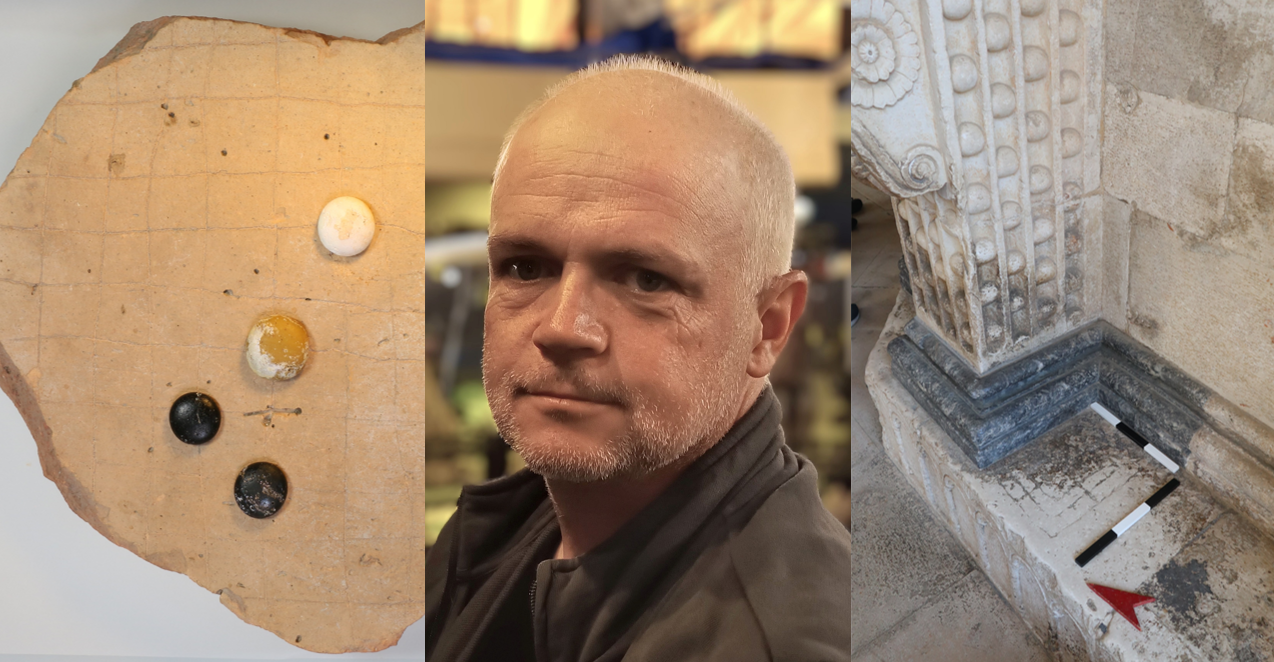
Within the University of Reading Classics Department, Branislav's primary academic contact is Dr Tim Penn, with whom he shares an interest in board games from the past.
Dr Rosanagh Mack
Dr Rosanagh (Rosie) Mack received her PhD in Classics from the University of Reading in 2022 for a thesis entitled ‘The Role of the Horse on Thessalian Coinage, ca. 479-323 BC’, supervised by Prof Emma Aston, and Prof Rachel Mairs as second supervisor. Her revised thesis will shortly be published (2026) by Archaeopress entitled Equine Currency: Thessalian Coinage and the Horse in the Classical and Hellenistic Periods.
Her research focuses on ancient Thessaly, primarily all aspects of its coinage. This is reflected through forthcoming contributory chapters in edited volumes; papers on ancient Thessaly (to be published by Archaeopress), proceedings from a conference on animals in Greco-Roman antiquity (to be published by Routledge) and a study of the Thessalian torch race in a volume of papers edited by Prof Amy Smith and Dr Dania Kamini (to be published by De Gruyter). A further forthcoming chapter in a Festschrift reflects her wider interest in equine representations in Greek art.
Rosie is the General Editor of KOINON: The International Journal of Classical Numismatic Studies
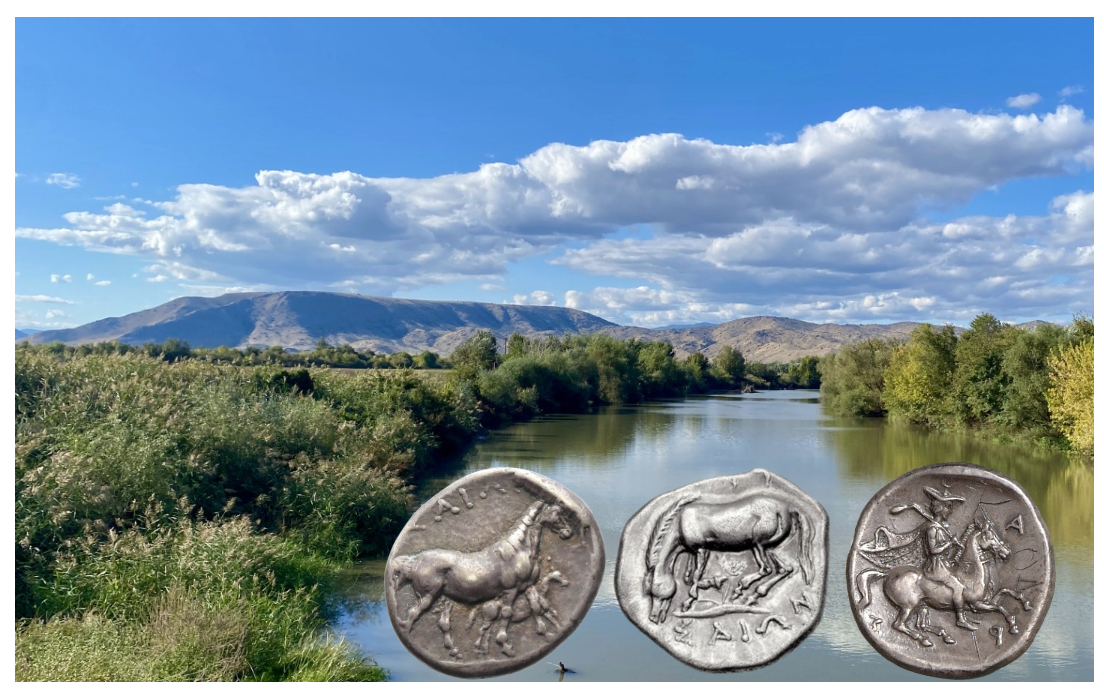
Within the University of Reading’s Classics Department, Rosie’s primary academic contact is Prof Emma Aston with whom she shares a keen interest in the horse in ancient Thessaly. She is working with Prof Aston to establish a new Thessaly Research Network.
Dr Katia Margariti
Dr Katia Margariti's main interests are Greek sculpture and vase painting, iconography, funerary art, animals in antiquity (with special emphasis on dogs), and death and burial rites. She has published three monographs titled Dogs in Athenian Sculpture and Vase Painting of the Archaic and Classical Periods, The Death of the Maiden in Classical Athens, and Death and Burial in Classical Athens (the latter in Greek and designated university textbook status).
She is also co-authoring a book on animals in ancient Greece with Kenneth Kitchell (to be published by Routledge in 2026) and The Literature, Inscriptions, and Iconography of Achelous with Nick Molinari (to be published by Edinburgh University Press). Dr Margariti has written and published various articles (two of them in Hesperia), a chapter in the Handbook of Greek Sculpture by Olga Palagia (published by De Gruyter), and has co-organised two international online conferences on animals in the ancient Mediterranean. She is currently involved in co-editing the conference proceedings and editing a Festschrift.
Dr Margariti gives monthly radio talks on various subjects related to ancient Greece and has been invited as a speaker on several podcasts exploring the history and archaeology of ancient Athens. She is also co-founder and co-administrator, together with Kenneth Kitchell, of the online group Zoa: Animals in Greco-Roman Antiquity.
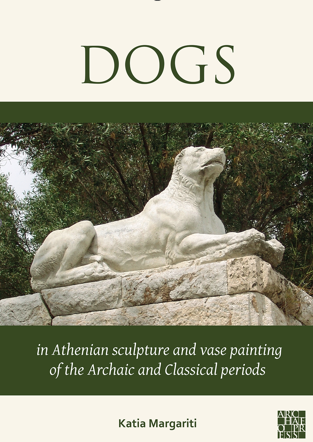
Within the University of Reading Classics Department, Katia's primary academic contact is Professor Emma Aston, with whom she shares an interest in animals in the ancient world.
Academia profile | email Dr Margariti
Dr Oksana Ruchynska, Associate Professor, Ancient and Medieval History V. N. Karazin Kharkiv National University, Ukraine
Oksana Ruchynska is a specialist in the history and archaeology of the Greek cities of the Northern Black Sea region. Her monograph Culture and Society of Greek Cities of the Northern Black Sea Coast (6th century BC – 4th century AD) was published in 2017.
Her research focuses on the social and cultural history of the ancient Northern and Western Black Sea regions; Greek and Roman religious ceremonies and festivals; games and leisure in the Greco Roman and Late Antique periods; euergetism in Roman period Northern Black Sea poleis; Greek epigraphy; and the Ancient and Modern Greek languages.
Since 2022, she has worked as a senior researcher in several projects at the University of Fribourg (Switzerland), including the Scholar at Risk / SNSF Scientific Exchange Grant, the ERC Advanced Project Locus Ludi. The Cultural Fabric of Play and Games in Classical Antiquity, and the SNSF project l'Opus imperfectum in Matthaeum (CPL 707).
She has participated multiple times in the Erasmus+ Staff Mobility for Teaching programme at the University of Klagenfurt (Austria). In 2026, she received an STSM Grant within COST Action CA22145 – Computational Techniques for Tabletop Games Heritage (GameTable) at the University of Reading, Department of Classics (UK).
Within the University of Reading Classics Department, [first name's] primary academic contact is Dr Tim Penn, with whom she shares an interest in ancient games.